Editor’s Note
This article is part of The Experience Center Operating Model, a series exploring what it actually takes to run a modern support experience center at scale, across people, automation, governance, and culture.
You will meet Jeff throughout this series. Jeff is a fictional character, but his situations are not. If he feels familiar, it is because most leaders pass through the same moments, face the same pressures, and make the same mistakes, often without realizing what is happening until the system pushes back.
If you arrived at this page by chance or through search, I recommend starting at the main series page to understand why this work exists and how the parts connect.
Jeff did not feel triumphant at the end of this journey.
He felt quieter.
The urgency that once drove every decision had softened into something more deliberate. The system no longer needed constant intervention. Problems surfaced earlier. Decisions were made closer to the work. Escalations felt purposeful instead of panicked.
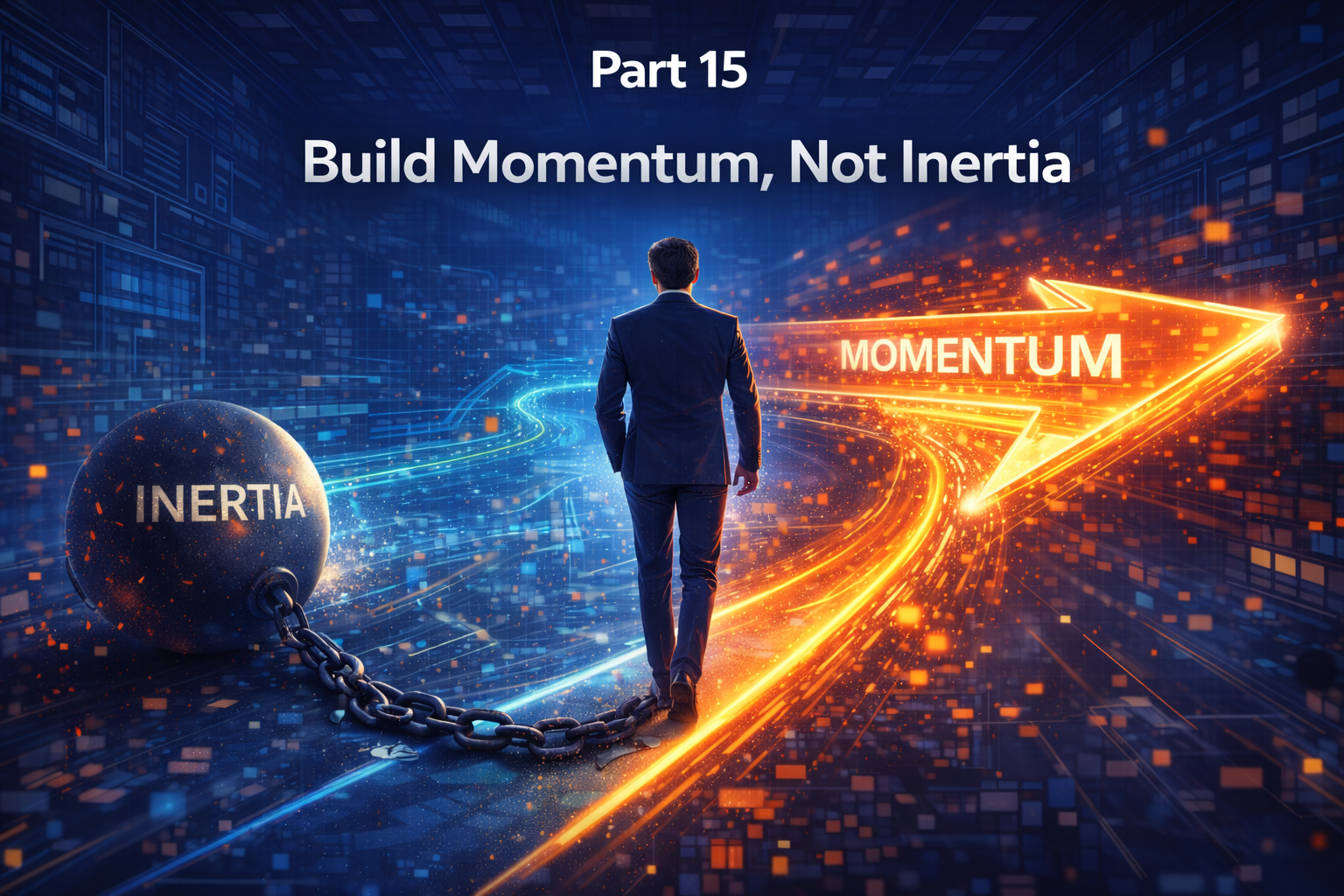
For the first time in a long time, Jeff was not the center of the system.
That was the point.
Leadership Is Not Control. It Is Design.
Early in his career, Jeff believed leadership meant being decisive.
Having answers.
Moving quickly.
Removing obstacles.
And for a while, that worked.
But scale changed the rules.
The more complex the system became, the less any single person could safely control it. Decisions multiplied. Tradeoffs collided. Pressure arrived faster than information.
Control became fragile.
Design became essential.
Jeff learned that leadership was not about making the right decision every time.
It was about designing conditions where good decisions could be made consistently, even when he was not present.
Most Failures Were Rational in the Moment
Looking back, Jeff realized something uncomfortable.
Very few failures were caused by incompetence.
They were caused by reasonable people making reasonable decisions inside poorly designed systems.
Agents guessed because escalation was discouraged.
Managers pushed metrics because incentives demanded it.
Leaders bypassed governance because speed was rewarded.
Automation drifted because no one owned its outcomes.
The system taught people how to behave.
Jeff stopped blaming behavior.
He started redesigning the system that produced it.
Trust Is Built Into the Operating Model
Trust was not a soft outcome.
It was structural.
When people knew when to escalate, they escalated early.
When judgment was rewarded, people slowed down when needed.
When automation was bounded, people trusted it without fear.
When governance was embedded, it was followed without resentment.
Trust emerged not from speeches, but from consistency.
The system either earned trust, or it quietly destroyed it.
There was no neutral state.
The Hardest Part Was Letting Go
The most difficult change Jeff made was internal.
He stopped being the final checkpoint.
He stopped resolving every exception.
He stopped being indispensable.
Not because he cared less.
But because he cared more about what would remain.
The system did not need a hero.
It needed coherence.
What Running This System Ultimately Required
In the end, running a support experience center was not about support at all.
It required:
Respect for variability.
Humility in the face of complexity.
Discipline to design before reacting.
Courage to make judgment explicit.
Patience to let systems work.
Willingness to be replaced by what you built.
Jeff did not perfect the system.
He made it honest.
And that was enough.
The Final Rule
Leadership is measured by what continues to work after you stop touching it.
If the system collapses without you, you did not lead it.
You carried it.
Jeff stopped asking whether the experience center needed him.
He asked whether it trusted itself.
When the answer became yes, he knew the work was done.
If this series resonated, it is not because Jeff’s journey was unique.
It is because complexity always teaches the same lessons.
The only difference is whether we listen early, or after the system forces us to.
That choice belongs to every leader.